Beyond Simply Replacing the Component
When a leak occurs or a dispenser malfunctions, there is only one priority: getting production back up and running as quickly as possible. A bottle leaking during transport or a closure that does not screw on properly is not just an operational setback; it can also directly damage brand reputation and affect business margins.
When faced with an urgent issue, the instinct is almost always to point the finger at the individual component: “The cap is defective, let’s replace it.” However, in primary packaging, the point where a defect occurs rarely coincides with its actual cause.
The problem almost always lies in the system, not in the individual component
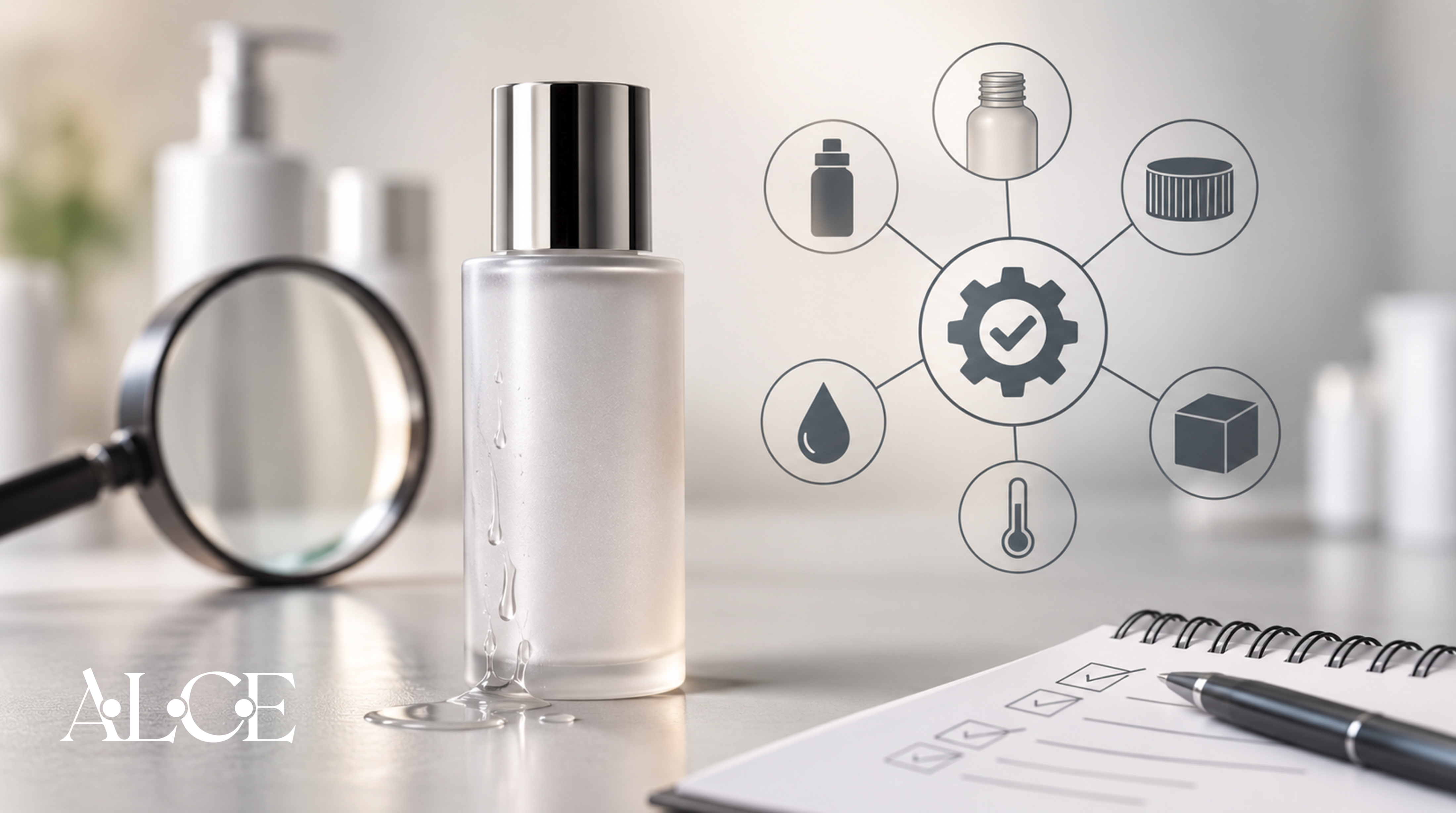
Let’s consider a typical case: a bottle that starts leaking after storage or as a result of vibrations during transportation. The closure is inevitably the first component to be checked. Yet, achieving a reliable seal depends on several factors working together:
- The geometry of the bottle neck and its dimensional tolerances.
- The chemical and physical compatibility between the materials (e.g. HDPE, PP, glass) and the product formulation.
- The application torque applied on the production line.
A closure may fully comply with every technical specification, yet fail once paired with a particular bottle. Blindly replacing the cap, or changing several parameters simultaneously just to get the production line running again, risks masking the problem rather than solving it. Worse still, it makes it difficult to understand what actually worked.
The hidden cost of temporary solutions
For those responsible for purchasing, quality or production, the real cost of a packaging issue is not the price of the replacement component. It is the hours of machine downtime, batches placed on hold, repeated testing and delayed deliveries.
Furthermore, a solution that works in the laboratory may prove unsuitable under normal industrial production conditions. An alternative material might solve a sealing problem but create new challenges in terms of supply availability or product compatibility. This is particularly critical in the cosmetics, pharmaceutical and food industries.
Turning experience into a shared methodology
When a technical issue is resolved, one of the greatest risks is that the solution remains in the hands of the person who managed the emergency. If that know-how is not properly documented and shared, the same problem may reappear months later on a similar product.
Sharing the information gathered across technical, quality, production and purchasing departments helps establish more robust technical specifications and prevent problems before production even begins.
The supplier’s role: from component vendor to technical partner
This change in approach can only work if component suppliers are involved as well. If the relationship with a supplier is limited to submitting a complaint and requesting a return, the analysis is bound to remain superficial.At ALCE, we approach every technical issue by looking at the performance of the entire bottle-and-closure system. We draw on our application expertise to analyse data together with our customers and identify which checks and tests are genuinely necessary.
The real value of know-how does not lie in having an immediate answer to every problem, but in knowing which questions to ask before taking action. Only then can an unexpected production issue stop being a cost and become a competitive advantage.